5 Ways to Create Visual Metaphors
Without dialogue.

You’re creating a visual that feels obvious, on-the-nose, and literal.
Visuals in media need to say more than what they represent.
Strong visual metaphors have meaning that launch the viewer’s imagination, pulls them into a story, and offers “1,000 words” at a glance.
Whether you’re a filmmaker, writer, designer, or social media storyteller, here are five practical ways to create visual a metaphor.
1. Use a Prop as an Emotional Metaphor
Object are metaphors for a character’s inner world. Objects suggest emotional subtext because when they become symbolic.
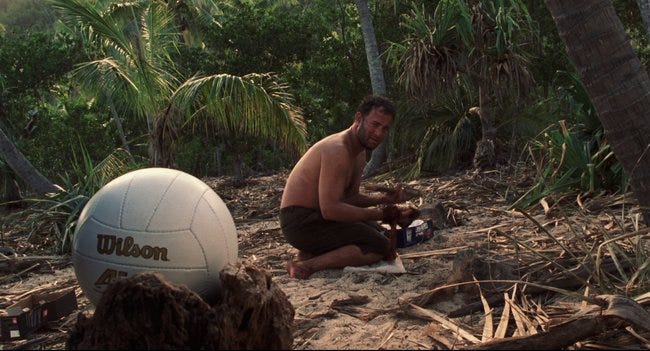
Movie example: In Cast Away, the volleyball “Wilson” represents loneliness, hope, and desire for human connection.
How-to create the metaphor;
Decide on a character,
Decide what they want,
Find an object that represents what they long for.
Creative example; A 30 year old executive is trying to find meaning in their life. He had carried a 1976 Montreal Canadians team hockey card in his wallet since his father died of a stress-related heart attack. He pulls it out after a bad meeting or during family dinners.
Representation; Meaning is found when we work together for a common purpose.
2. Contrast Two Elements; the Difference = Metaphor
Two opposing visuals creates space for interpretation. The contrast between two images becomes a void; the audience naturally want to make sense of this juxtaposition. Image A + image B = the metaphor.
Movie example: In American Beauty, the floating plastic bag against the brick wall becomes a metaphor for the character’s acknowledgement of beauty, fragility, and sense of aimless fate.
How-to create the metaphor; Contrast two visuals that seem like opposites (soft vs harsh, beauty vs age, sacred vs profane). Put them together in a context, giving them a reason to co-exist.
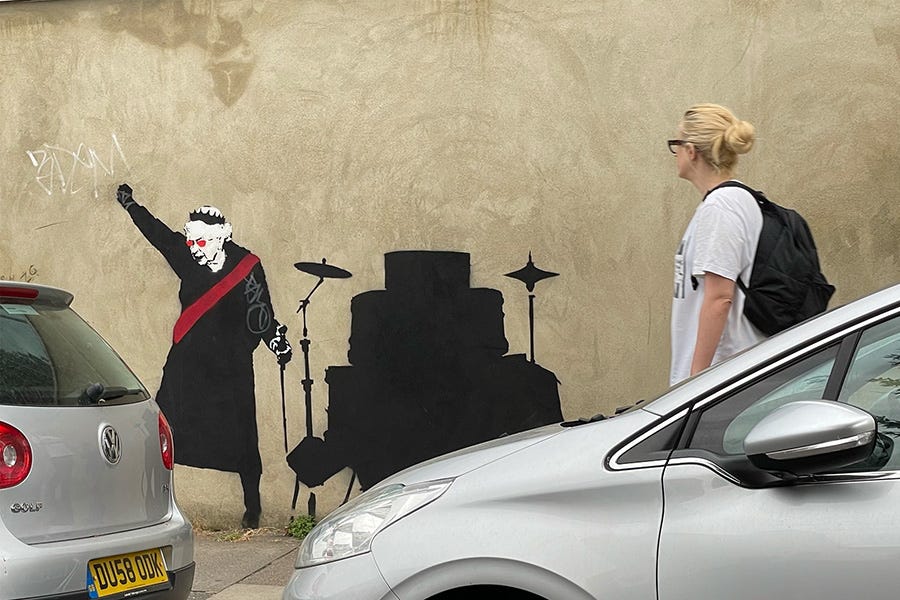
Creative example; Here’s a picture I took of an original Banksy in Hamstead Heath (London). I took a picture of the graffiti alone but it didn’t tell a story until this woman came along to inspect it. Graffiti + the woman suggests the contrast that become metaphoric for something else. I’m not going to tell you what I was thinking; I’ll leave that up to you.
3. Transformation Suggests Metaphor
When something changes physically, it mirrors emotional change, becoming a metaphor for a character’s personal journey.
Movie example; Remember the most famous shot from Jaws? The Sheriff is sitting in the beach when he hears the scream, realizes the attack, and his life is immediately transformed as the camera zooms into his expression (a unique technique called a stretch).
How to create the metaphor; Use storytelling tools to suggest transformation. The audience will recognize the change in your character and story. Techniques include colour, camera angles, focal distances, slow motion, backgrounds, music, sfx, etc.
Creative example; Those who know me know of my affinity for the use of sound design: In the climactic moment of a film, as we watch the main character, we know they “lost.” Or did they? Something is different; they are undergoing an inner, positive emotional change. What did I do with the sound? I sampled the ambience, turning it into minor/dissonant chord, creating a negative effect. As we look at the hero in the climax, I fade the minor chord into a major chord, making the audience feel like something is changing in the character, creating a happy and positive effect. The audience experience the hero’s transformation through the sound. The metaphor; the existential victory of the hero.
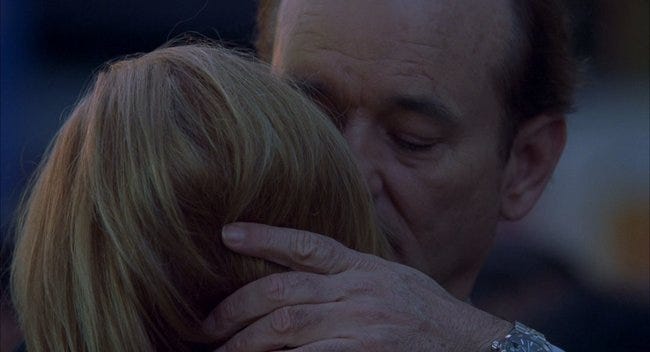
End of Lost in Translation - Bill Murray whispers reassurance in Scarlett Johansson’s ear. We don’t hear what he says, leaving it to our imagination. But we see the transformation in both of them. The moment provides a transformational metaphor; butterflies emerge from the cocoon.
4. Light, Shadows, Reflections, Silhouettes as Metaphor
Distorted and hidden images often reveal metaphoric truth behind a story.
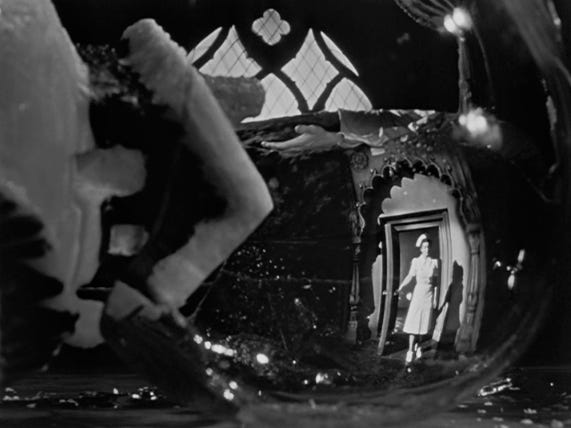
Movie example: “Rosebud” is probably the most famous word in cinema history. It was also confusing because we had to wait until the end of the movie to find out what it meant, and even then …. But it is the visual in this scene in Citizen Kane that suggests the character’s troubled and distorted journey, bringing him to this regretful moment at the end of his life. What we see in the moment is the distorted reflection in a snow-globe as it falls and shatters. The metaphor is the combination of visuals, dialogue, and action as the globe rolls out of the character’s hand. We just don’t know what the metaphor is at the start of the movie.
How to create the metaphor; Use light creatively; shadow can say what a character can’t. Mirrors, reflections, rain on a window with light that projects droplets/tears on a character’s face are great ways to create visual metaphors. Start with a character and put them somewhere where the light, dark, glass, or mirror capture their reflection, giving the frame symbolic potential.
Creative example; Think of a young boy watching kids play, using the window as way of reflecting what he sees, yet separating him from what he wants. A dad watches his kids in back seat as they interact, oblivious of his gaze; his reaction provides the metaphor for what he is feeling. Narcissus (Greek god) gazes longingly at himself in the water before a rock suddenly disrupts the smooth pool, distorting his view of himself.
5. Repetition Creates Expectation Before Subverted = Metaphor
The repetition of images becomes metaphor. While the images are different, their similarities suggest a common meaning. This idea can be combined with the above metaphor techniques.
Movie example: Day in the Life from 2010 and 2020 are two brilliantly edited movies. They are documentaries by YouTube that use footage captured on a single day from around the world, showing what it means to be a human on Earth. They create expectation through repetition before throwing the audience into a new sequence, location, and event. We don’t have time to think about the difference between shots and sequences, but we certainly feel it. That makes for great art.
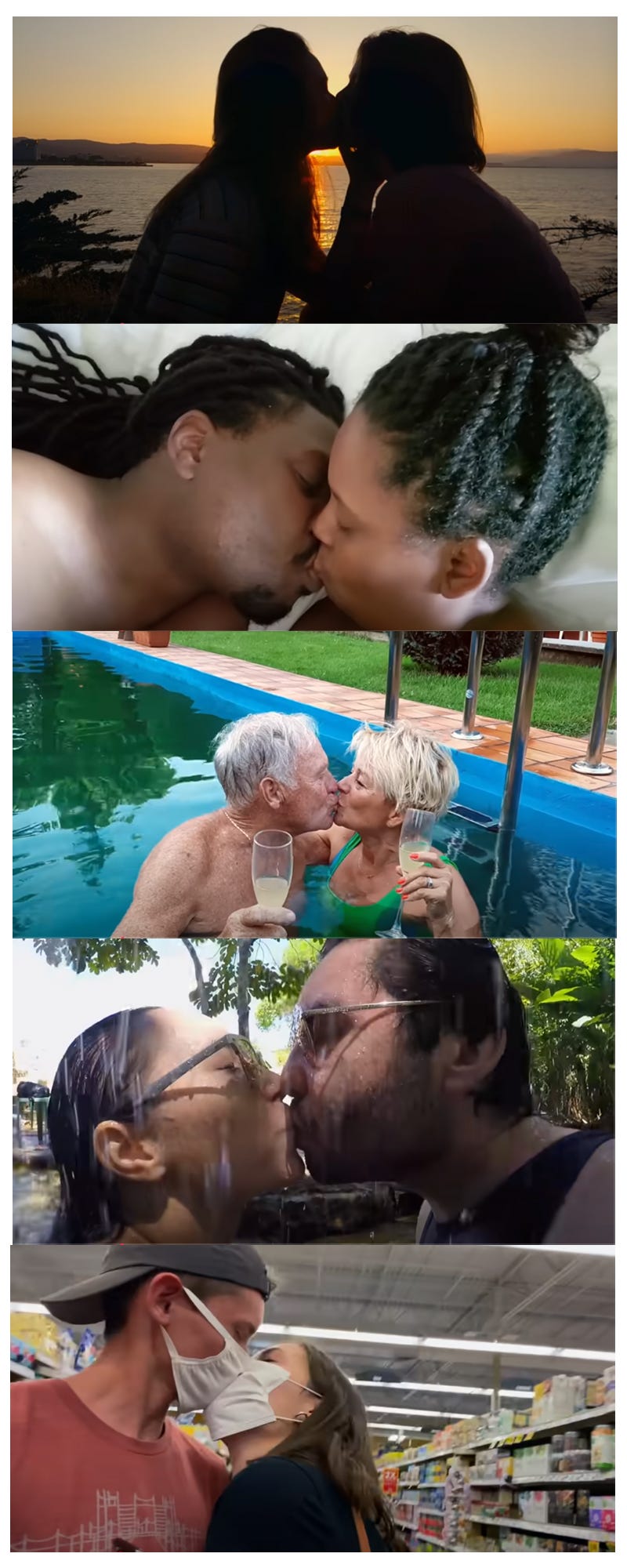
How-to create the metaphor; “Duck, duck, duck, goose.” (Remember that kindergarten game?) Anything can be repeated; visuals, themes, motion, text, colour, sound, shot sizes, angles, framing, sounds, etc. Lead the audience by repeating a similar-element at least three times, creating the expectation. Then on the fourth repetition (or so), add a different element gets the viewer to sit up and take notice, thinking about how + why something is different. The more opposite or random the final element, stronger the it emphasis the metaphor behind the similar images and the contrast with the new element.
Creative examples;
‘Red, blue, yellow, green, rabbit.’
‘Dog, cat, hamster, husband.’
‘Car, motorcycle, boat, plane, Jason with an ax.’
‘Bird chirp, gentle water in a brook, wind, car horn.’
‘Kramer, George, Jerry, Elaine, Donald Trump.’
Connect Visual Metaphors
Here is an exercise to think about and try: In one video shot, move three objects on a table that represent you (prop metaphor), replacing them with your hand.
The fourth object is photo of someone meaningful to you (repetition/expectation metaphor). Place a small mirror next to the picture (contrasting objects), looking back up at yourself (reflection), offering whatever expression seems appropriate to you (transformation).
I’d love to see what you shoot.
Subscribe for more about practical media and aesthetics.